
Frosted Brown Sugar Cinnamon Pop Tart Cookies
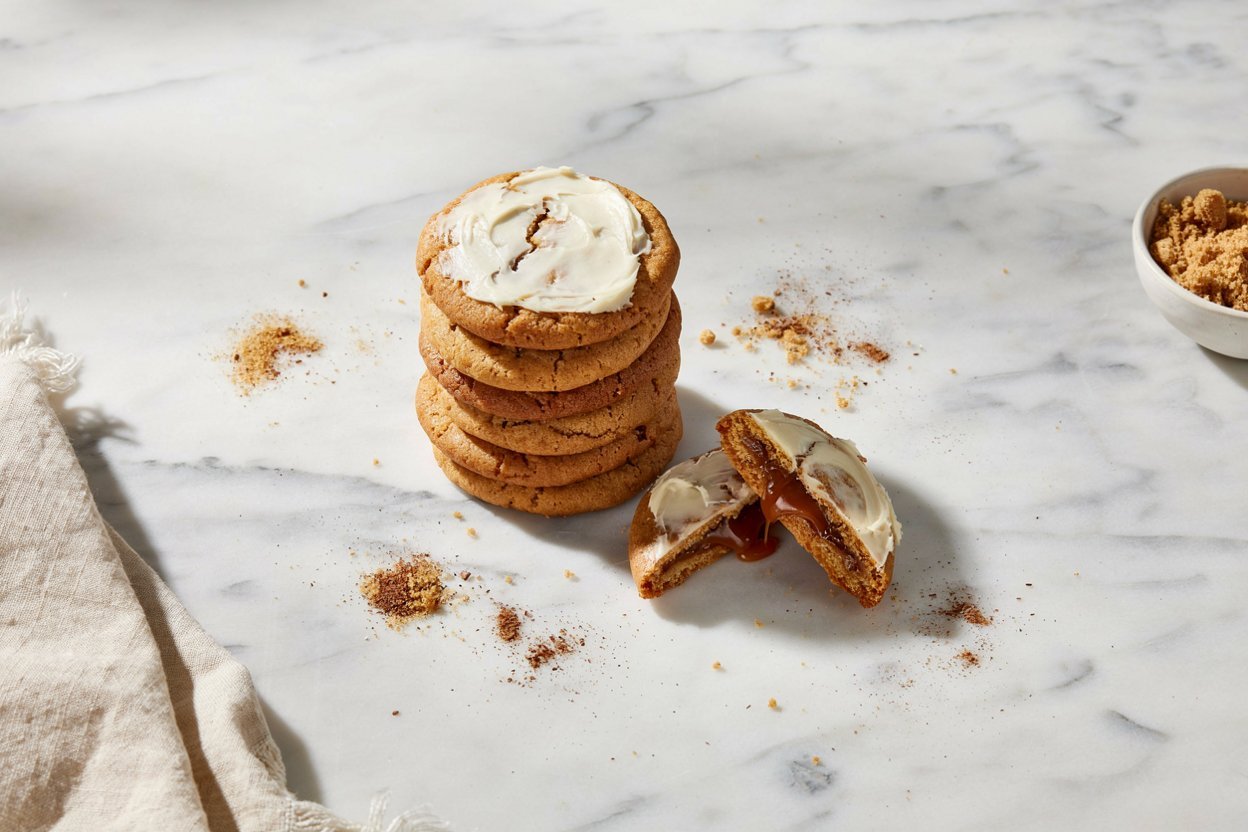
If you grew up eating brown sugar cinnamon Pop-Tarts straight out of the toaster, you already know exactly the flavor these cookies are chasing.
I wanted something that captured that same warm, molasses-y cinnamon sweetness, but in cookie form, soft and thick, with an actual pocket of that brown sugar filling running through the middle instead of just cinnamon mixed into the dough.
It took some trial and error to get the filling to actually stay put instead of leaking out during baking, and the frosting had to be right too, not too thin, not too sweet, with enough cinnamon in it to tie back to the filling instead of just tasting like a plain glaze on top.

Once I nailed both of those, this became one of those cookies that disappears within a day of baking, no matter how big the batch is.
These are rich, soft-centered, and genuinely taste like a nostalgic breakfast pastry reimagined as a proper dessert. They’re a bit of a project compared to a drop cookie, but nothing here is difficult, just a few extra steps worth the payoff.
Why This One Works
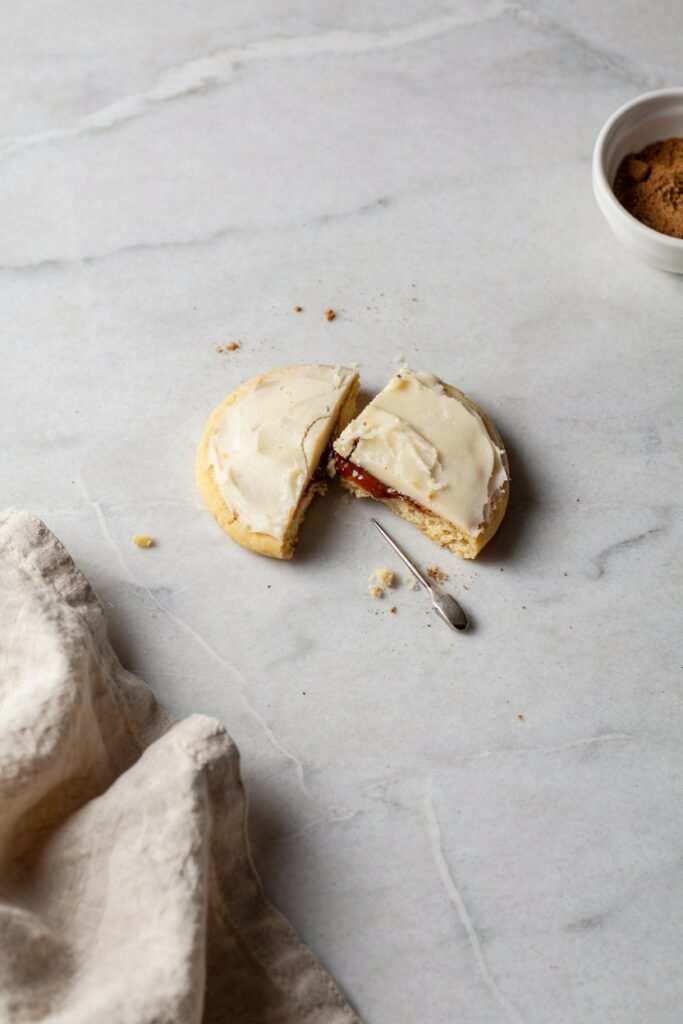
The filling actually stays inside. Chilling the filling before wrapping it in dough, and sealing the edges properly, is what keeps that brown sugar cinnamon pocket from oozing out into a puddle on your baking sheet.
The cookie base is soft, not cakey. A combination of butter and a touch of shortening or extra brown sugar keeps these cookies chewy and soft in the center rather than fluffy like a cake cookie, which matters a lot for the texture contrast against the filling.
The frosting ties everything together. A cinnamon brown sugar glaze on top instead of a plain vanilla one means every bite, top to bottom, reinforces the same flavor instead of feeling like two separate desserts stacked together.
What Makes the Texture Different
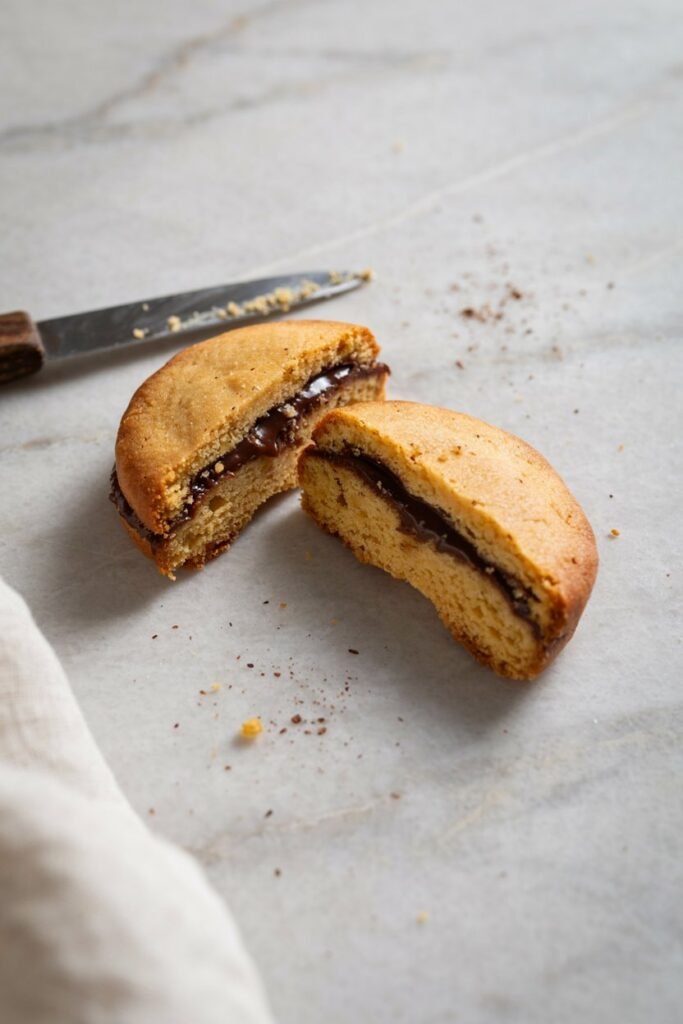
The dough itself uses more brown sugar than white sugar, which keeps it soft and slightly chewy days after baking, since brown sugar holds onto moisture better than white sugar does.
If you’ve made cookies that turned hard and dry by day two, that’s usually a sign the recipe leaned too heavily on white sugar.
The filling is the trickier part. It needs to be thick enough to hold its shape when you wrap dough around it, but not so stiff that it doesn’t melt into that gooey pocket once baked. Chilling the filling into small discs before assembly is what makes this actually manageable instead of a sticky mess.
Ingredients
For the Cookie Dough
- Unsalted butter, softened. The base of the dough’s richness.
- Brown sugar, packed. The main sugar in this dough, responsible for both the soft texture and the deep, slightly caramelized flavor.
- Granulated sugar. A smaller amount alongside the brown sugar for structure and a bit of crisp edge.
- Eggs. Bind the dough together.
- Vanilla extract. Rounds out the sweetness.
- All-purpose flour. The structural base of the dough.
- Baking soda. For lift and spread.
- Salt. Balances the sweetness throughout.
For the Brown Sugar Cinnamon Filling
- Brown sugar. The core flavor of the filling.
- Ground cinnamon. A generous amount, since this filling needs to read clearly as “cinnamon” against the plainer cookie dough.
- Butter, melted. Helps bind the filling and gives it a fudgy texture once baked.
- A small amount of flour. Keeps the filling from becoming fully liquid in the oven.
For the Frosting
- Powdered sugar. The base of the glaze.
- Milk or heavy cream. Thins the frosting to a spreadable consistency.
- Ground cinnamon. Ties the frosting back to the filling.
- Vanilla extract. Rounds out the flavor.
- A pinch of salt. Keeps the frosting from tasting flat or one-note sweet.
Substitutions I’ve Actually Tested
No shortening on hand? All butter works fine, the cookies will just spread slightly more and be a touch less thick.
Want a deeper filling flavor? A small pinch of nutmeg or a dash of maple extract in the filling adds a nice depth without overpowering the cinnamon.
Dairy-free? A plant-based butter substitute works in both the dough and filling, and a dairy-free milk works fine in the frosting.
No time to chill the filling discs? You can skip the freezing step and use the filling straight from the fridge, though the pockets are more likely to shift slightly during assembly, which is a fine trade-off if you’re short on time.
Kitchen Tools You’ll Need
- Stand mixer or hand mixer
- Mixing bowls
- Baking sheets
- Parchment paper or silicone baking mats
- Small cookie scoop or spoon for portioning dough
- Small spoon or piping bag for filling
- Wire cooling rack
- Small bowl for the frosting
How to Make Frosted Brown Sugar Cinnamon Pop Tart Cookies
Step 1: Make the Filling
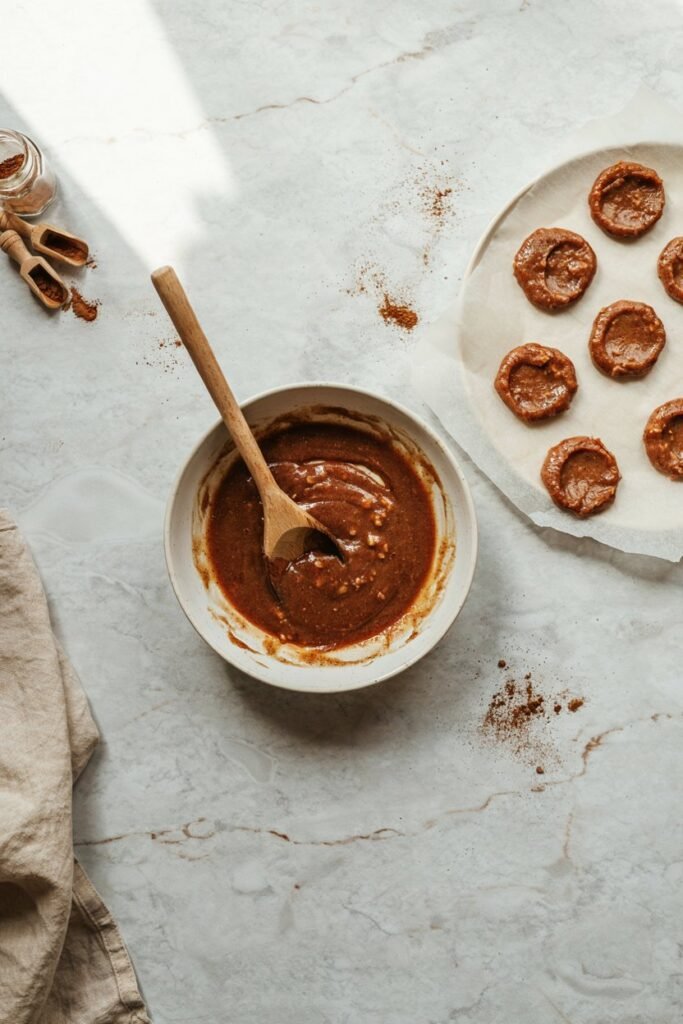
Stir together the brown sugar, cinnamon, melted butter, and flour in a small bowl until it forms a thick, paste-like mixture.
Portion it into small discs, about a tablespoon each, on a parchment-lined plate, then freeze for at least 30 minutes. I always do this step first so the filling is ready to go by the time the dough comes together.
Step 2: Make the Cookie Dough
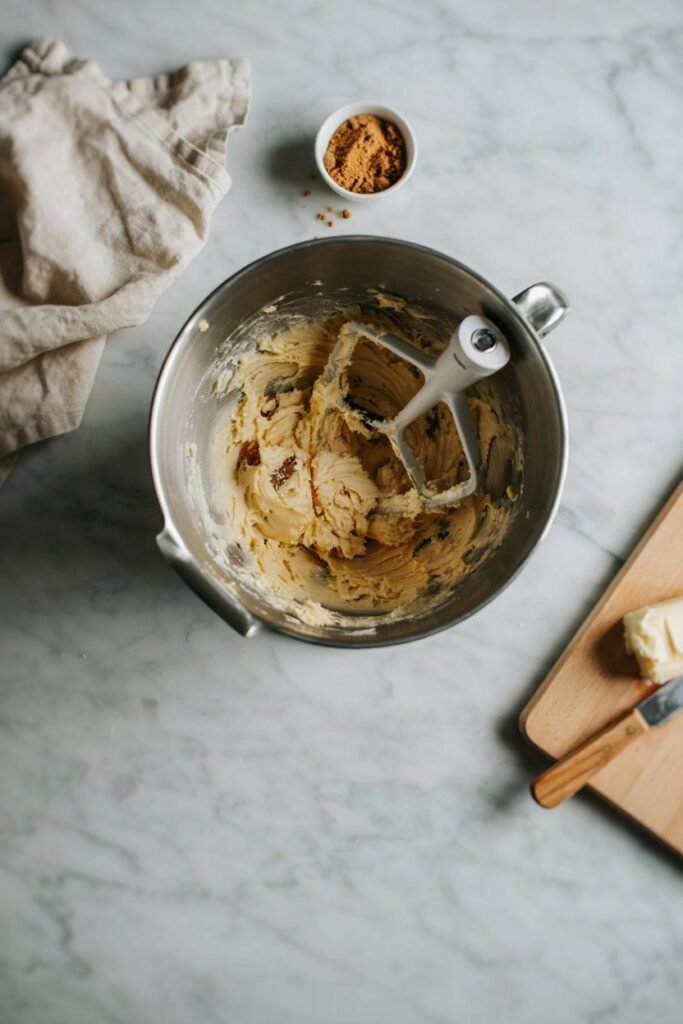
Cream the softened butter, brown sugar, and granulated sugar together until light and fluffy, about 2 to 3 minutes. Beat in the eggs one at a time, then the vanilla.
In a separate bowl, whisk together the flour, baking soda, and salt, then gradually mix into the wet ingredients until just combined.
Step 3: Assemble the Cookies
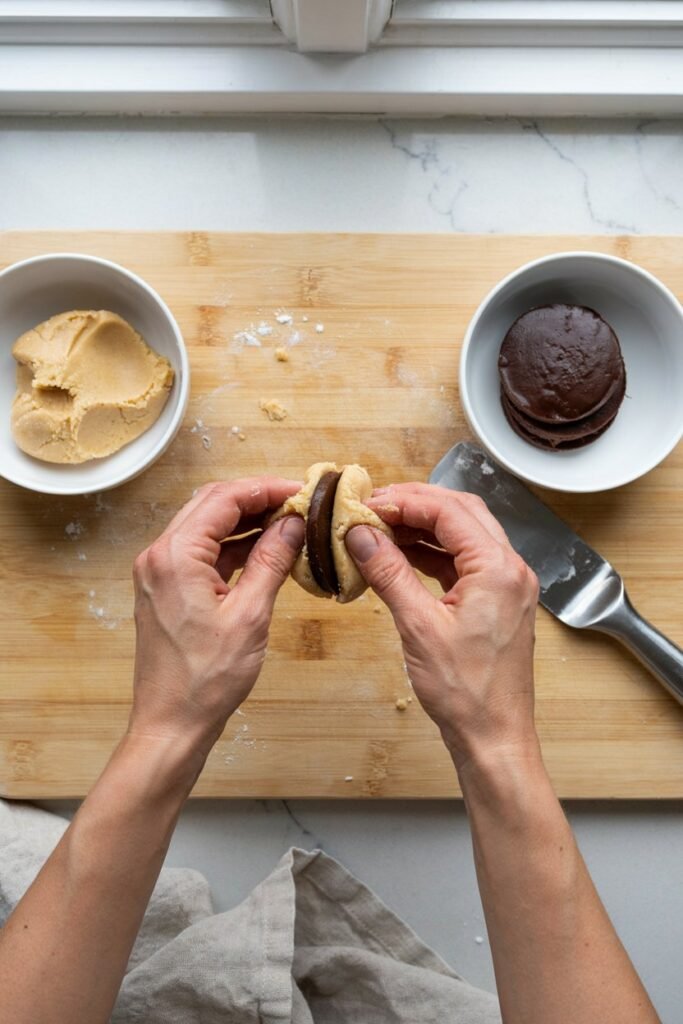
Scoop about 2 tablespoons of dough, flatten it slightly in your hand, and place one frozen filling disc in the center.
Top with another small piece of dough, and gently seal the edges, rolling the whole thing into a ball so the filling is fully enclosed. This step takes a little patience, but it’s what keeps the filling from leaking out during baking.
Step 4: Chill the Assembled Dough
Place the assembled cookie dough balls on a tray and refrigerate for at least 30 minutes. This firms everything back up after handling it, which helps the cookies hold their shape in the oven instead of spreading too thin.
Step 5: Bake
Preheat your oven to 350°F. Place the chilled dough balls on a lined baking sheet, spaced a few inches apart, and bake for 11 to 13 minutes, until the edges are set but the centers still look slightly underdone. They’ll continue to firm up as they cool.
Step 6: Cool
Let the cookies rest on the baking sheet for about 5 minutes before transferring them to a wire rack to cool completely. This matters more than it seems, since the filling is molten right out of the oven and needs time to set.
Step 7: Frost
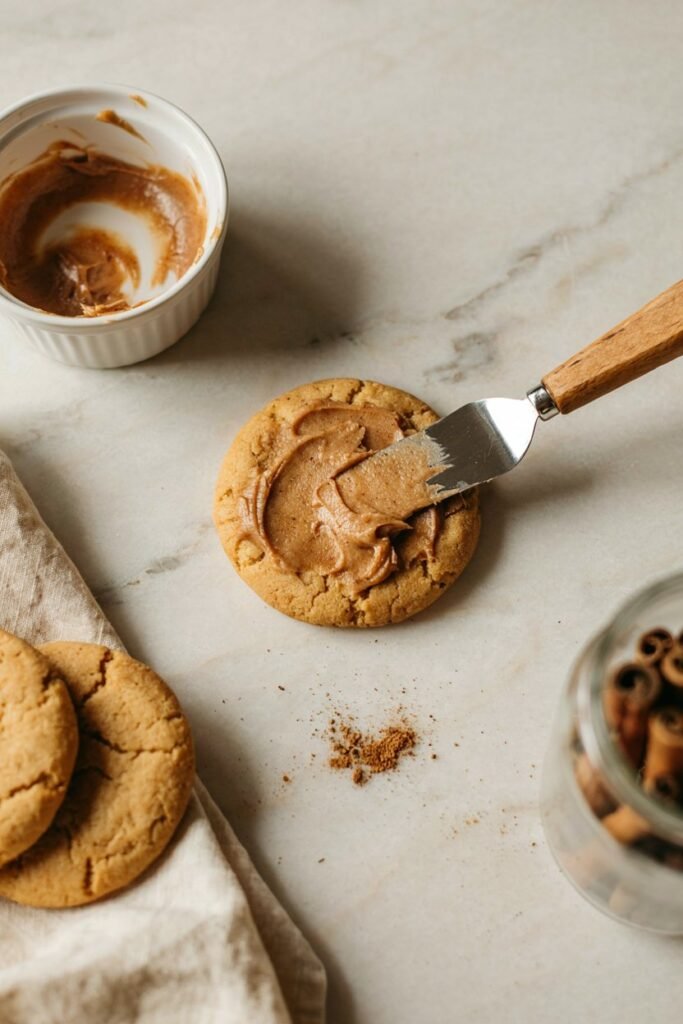
Once the cookies are fully cool, whisk together the powdered sugar, milk, cinnamon, vanilla, and salt until smooth. Spread a spoonful over each cookie and let the frosting set for about 10 minutes before serving.
Tips From Making This More Times Than I’ll Admit
- Don’t skip chilling the filling discs. Filling that’s too soft when you wrap the dough around it is the number one reason it leaks out during baking.
- Seal the dough fully around the filling. Any gaps or thin spots are where the filling will find its way out in the oven.
- Don’t overbake. These cookies look underdone in the center when you pull them, and that’s exactly right. They firm up significantly as they cool.
- Let the cookies cool completely before frosting. Warm cookies will melt the frosting right off.
- Weigh your dough portions if you want consistency. I started doing this after noticing my cookies baked unevenly when I was just eyeballing the size.
Mistakes I’ve Made So You Don’t Have To
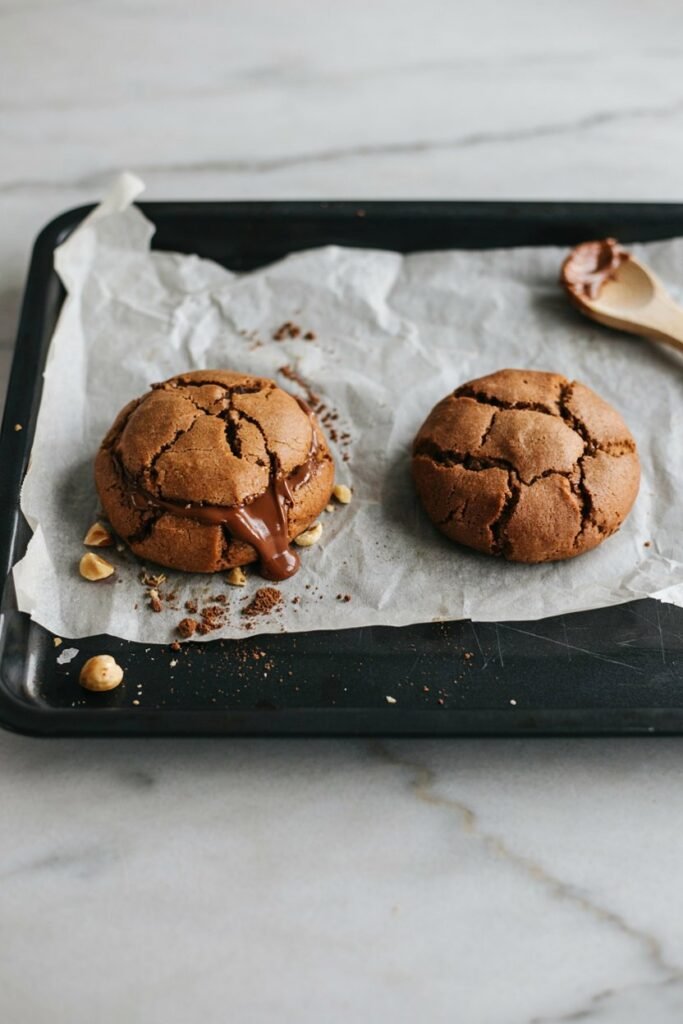
Skipping the filling chill time because I was impatient. The filling oozed out the sides of half the batch and burned slightly on the baking sheet.
Not sealing the dough seams well enough. Ended up with a few cookies that split open in the oven, which looked messy even though they still tasted fine.
Frosting cookies while they were still slightly warm. The frosting turned into a thin, see-through glaze instead of sitting nicely on top.
Overbaking because I was worried they looked underdone. Lost that soft, chewy center I was going for. Trust the visual cue of a slightly underbaked-looking center.
Troubleshooting
My filling leaked out during baking. This usually means the filling wasn’t chilled long enough before assembly, or the dough seams weren’t fully sealed. Make sure the filling discs are firm and frozen, and pinch the dough seams closed completely before rolling into a ball.
My cookies spread too thin. Check whether the assembled dough got its second chill before baking. Skipping that step, or using butter that was too soft, is the most common cause of excess spreading.
The centers stayed doughy even after the suggested bake time. Oven temperatures vary, so give them another minute or two, checking that the edges are set even if the center still looks slightly soft, since it will continue to firm up as it cools.
My frosting turned out too thin. Add more powdered sugar a tablespoon at a time until it reaches a spreadable, not runny, consistency.
My frosting turned out too thick to spread. Add milk a teaspoon at a time until it loosens up.
Recipe Variations
Maple Brown Sugar Version. Swap the vanilla in the frosting for maple extract for a cozier, fall-leaning flavor.
Extra Gooey Filling. Increase the filling portion slightly for a bigger pocket of brown sugar cinnamon in the center.
Brown Butter Version. Brown the butter for the dough before creaming it with the sugars for a deeper, nuttier flavor throughout.
Iced Instead of Frosted. Thin the frosting further into a glaze and drizzle rather than spread for a lighter finish.
What to Serve With It
- A cold glass of milk, the classic pairing for a reason
- Hot coffee or chai, since the cinnamon notes pair naturally with both
- A scoop of vanilla ice cream if you want to turn this into a full dessert
Storage
Room temperature. Store in an airtight container for up to 4 days. The texture stays soft thanks to the brown sugar in the dough.
Freezer. Both the baked, frosted cookies and the unbaked assembled dough balls freeze well. Freeze unbaked dough balls on a tray until solid, then transfer to a freezer bag for up to 3 months, baking straight from frozen with a couple of extra minutes added.
Make Ahead Notes
The filling and dough can both be made a day in advance and kept in the fridge. The assembled, unbaked cookie dough balls also hold well in the fridge for up to 2 days before baking, which makes this a good recipe to prep in stages if you don’t want to do everything in one sitting.
Frequently Asked Questions
Can I make these without the filling, just cinnamon mixed into the dough? Yes, though you’ll lose the gooey pocket that makes these feel like an actual Pop-Tart. If you go this route, mix 1 to 2 teaspoons of cinnamon directly into the dough.
Why did my cookies turn out cakey instead of soft and chewy? This usually means too much flour was added, or the butter and sugar were overcreamed, incorporating too much air into the dough.
Can I freeze the assembled, unbaked cookies? Yes, and this is actually a great make-ahead option. Freeze on a tray until solid, then transfer to a bag, and bake straight from frozen with a few extra minutes added to the bake time.
How do I know when they’re done baking? The edges should look set and lightly golden while the center still looks slightly underdone. They’ll firm up as they cool, so pulling them a touch early is the right move.
Can I double this recipe? Yes, this scales well. Just make sure you have enough space to chill both the filling and the assembled dough balls without overcrowding your fridge.
Final Thoughts
These cookies took more testing than almost anything else on this site, mostly because of that filling refusing to cooperate in my first few attempts.
But once it worked, it really worked, and this has become the cookie I make when I want something that feels a little nostalgic and a little more special than a basic chocolate chip cookie.
If you make these, let me know how your filling pockets turned out, and whether you tried any of the variations.
Frosted Brown Sugar Cinnamon Pop Tart Cookies
Ingredients
Method
- Stir together brown sugar, cinnamon, melted butter, and flour for the filling. Portion into small discs and freeze for at least 30 minutes.
- Cream butter, brown sugar, and granulated sugar until fluffy. Beat in eggs one at a time, then vanilla.
- Whisk flour, baking soda, and salt together, then mix into the wet ingredients until just combined.
- Scoop dough, flatten, place a frozen filling disc in the center, top with more dough, and seal into a ball.
- Chill assembled dough balls for at least 30 minutes.
- Preheat oven to 350°F. Bake for 11 to 13 minutes, until edges are set and centers look slightly underdone.
- Cool on the baking sheet for 5 minutes, then transfer to a wire rack to cool completely.
- Whisk together frosting ingredients and spread over cooled cookies.
Notes
- Chilling the filling and the assembled dough are both essential to prevent leaking and spreading.
- Don’t overbake; cookies firm up significantly as they cool.
- Unbaked assembled dough freezes well for up to 3 months.